
Botox Allergan
Botox Allergan: Original Botulinum Toxin for Natural Facial Expression Correction
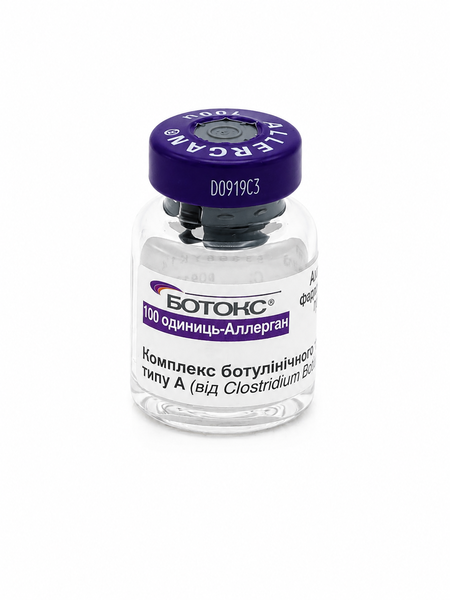
Botulinum toxin therapy has long been one of the best-known procedures in aesthetic medicine. However, behind the familiar word “Botox” lies an important detail: botulinum toxin is not a single product.
Today, there are several botulinum toxin type A products, and they differ in manufacturer, composition, manufacturing technology, auxiliary components, units of activity, and registered indications.
Botox® is the original botulinum toxin type A product, historically developed by Allergan. Today, Allergan’s aesthetic business is part of AbbVie and operates under the Allergan Aesthetics brand. This is why the product that many specialists and patients still refer to as “Allergan Botox” is now officially associated with AbbVie.
Botox® has become one of the most recognized products in aesthetic medicine for good reason. Behind its name is a long history of medical use, the standardized formulation onabotulinumtoxinA, and extensive clinical experience.
However, a good result is always about more than the product name.
Original Botox Allergan is a tool. A natural-looking result is achieved through proper assessment of facial expressions, knowledge of anatomy, individualized treatment planning, and the professional technique of the practitioner.
What Is Botox Allergan?
The active ingredient in Botox® is onabotulinumtoxinA (botulinum toxin type A).
It is a purified botulinum neurotoxin that temporarily reduces nerve signaling to a specific muscle.
Its mechanism of action involves blocking the release of acetylcholine, a neurotransmitter involved in transmitting signals from nerves to muscles.
As a result, the targeted muscle contracts less strongly.
This is particularly important in aesthetic medicine when excessive or repetitive facial muscle activity contributes to the formation of dynamic wrinkles.
Botox does not fill wrinkles or add volume.
Instead, it works by modifying muscle activity.
Why Is Botox Called the Original Product?
The history of Botox goes back much further than modern aesthetic cosmetology.
Botulinum toxin was initially researched and used in medicine to treat various conditions associated with abnormal muscle activity.
In the United States, Botox Cosmetic received its first aesthetic FDA approval in 2002 for the temporary improvement in the appearance of glabellar lines.
Today, Botox is used more broadly; however, aesthetic indications depend on the specific regulatory approval of the product in each country.
Thus, Botox is not a product created exclusively for cosmetic purposes. Its history is based on many years of medical use of botulinum toxin.
Which Areas Can Be Treated with Botox?
The officially registered aesthetic indications for Botox Cosmetic include the temporary improvement in the appearance of:
-
glabellar lines;
-
crow’s feet around the outer corners of the eyes;
-
horizontal forehead lines;
-
platysmal bands of the neck.
These indications are associated with the activity of specific muscles: corrugator/procerus, orbicularis oculi, frontalis, and platysma, respectively.
In aesthetic practice, botulinum toxin is also used in other areas and for other purposes. However, it is important to distinguish between officially registered indications and off-label use.
For patients, this is another reason to choose a practitioner who has a strong understanding of anatomy and considers not only the cosmetic outcome but also the medical aspects of the procedure.
When Does the Effect of Botox Allergan Appear?
Botox does not work immediately.
After the product is administered, muscle activity gradually decreases.
The first changes may become noticeable within several days, while the final result is usually assessed at approximately 10–14 days.
This is why a practitioner may invite the patient for a follow-up appointment.
At this stage, it is possible to objectively assess:
-
symmetry;
-
the degree of muscle relaxation;
-
eyebrow position;
-
the appearance of wrinkles;
-
whether any further correction is necessary.
How Long Does Botox Last?
The duration of the effect varies from person to person.
In aesthetic practice, the effect often lasts around 3–4 months, although this period may differ between individuals.
It can be influenced by:
-
individual muscle activity;
-
the treatment area;
-
the selected dosage;
-
individual physiological characteristics;
-
the intensity of facial expressions;
-
previous experience with botulinum toxin treatments.
Therefore, promising every patient a strictly defined duration of effect would not be appropriate.
Botox Allergan and a Natural-Looking Result
The main advantage of professional botulinum toxin treatment is not simply the absence of wrinkles.
The goal is to achieve a balanced, harmonious, and natural-looking result.
