
AMS Asia Exosomes IV Grade 5 ml
AMS Asia Exosomes IV Grade 5 ml
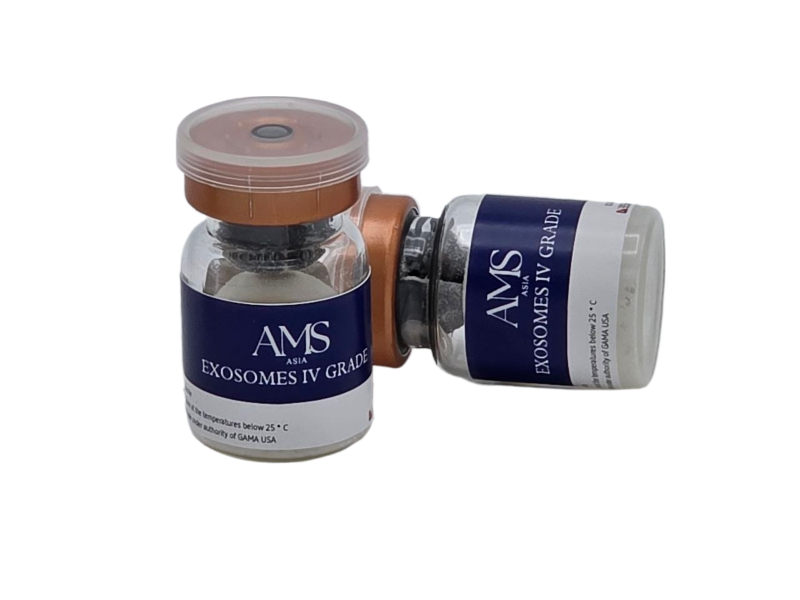
Next-Generation Exosome Technology for Skin Recovery and Quality Enhancement Programs
Modern aesthetic medicine is gradually moving beyond simply improving the visible appearance of the skin toward a more comprehensive approach focused on supporting its natural recovery processes.
One of the most promising areas in recent years has been exosome technology.
AMS Asia Exosomes IV Grade 5 ml is a professional exosome-based product intended for use in specialized programs within modern aesthetic and regenerative medicine.
Exosomes are microscopic extracellular vesicles involved in intercellular communication. They can transport various biologically active components, including proteins, lipids, and RNA molecules, which is why they are being actively studied as a potential tool for tissue recovery and the regulation of cellular processes.
Why Are Exosomes Attracting So Much Attention?
The cells of the human body are constantly communicating with one another.
One of the mechanisms involved in this communication is extracellular vesicles — microscopic “information carriers” through which cells can transmit biological signals to each other.
This is precisely why exosomes have become one of the most interesting areas of modern regenerative medicine.
They are being studied in the context of:
- tissue recovery;
- regulation of inflammatory processes;
- cellular communication;
- wound-healing processes;
- support of tissue homeostasis;
- skin recovery following damaging external influences.
At the same time, it is important to understand that exosome-based medicine is a rapidly developing field, and the characteristics and effectiveness of different exosome products can vary significantly. A professional approach therefore involves evaluating the specific product, its origin, manufacturing technology, and quality-control standards.
What Makes AMS Asia Exosomes Interesting for Aesthetic Medicine?
The key feature of the exosome-based approach is that it is not simply about adding individual cosmetic ingredients to the skin.
Exosomes are considered carriers of biological signals that participate in communication between cells.
This is why exosome-based products are of particular interest in programs where the specialist's goal is not only to improve the skin's visible appearance but also to create conditions that support its natural recovery processes.
In aesthetic practice, this approach may be particularly relevant for skin that is:
- showing signs of aging;
- experiencing a loss of tone and elasticity;
- dull and tired-looking;
- exposed to increased environmental stress;
- recovering after certain cosmetic procedures;
- showing signs of photoaging.
Who May Benefit from an Exosome-Based Program?
AMS Asia Exosomes may be considered as a component of comprehensive anti-aging and skin-recovery programs.
This approach may be particularly interesting for patients who want to address not only individual wrinkles but also the overall quality and condition of the skin.
This may include:
Aging Skin
As the skin gradually loses density, firmness, elasticity, and its ability to recover efficiently.
Tired-Looking Skin
When the complexion appears dull, the skin loses its freshness, and its overall appearance becomes less even.
Skin Showing Signs of Photoaging
Regular exposure to solar radiation can contribute to oxidative stress and gradual changes in the skin's structural characteristics.
Skin Recovery Programs
Exosome technologies are being investigated as a potential tool for supporting tissue-recovery processes, making this field particularly interesting for comprehensive programs following various aesthetic procedures.
Why Is a Professional Protocol Important?
Exosome technology is not a case where simply purchasing a vial and using it independently is sufficient.
For professional use, the following factors are essential:
quality of the source material → isolation technology → purification → concentration → product stability → sterility → proper transportation and storage conditions → correct application protocol.
